First, Conquer Scotland
The White Man's Bunker

Could Scotland be the British man’s White redoubt in the North, and what could Cornwall teach us?
We are witnessing the greatest native British population movement since the Industrial Revolution, perhaps earlier. Large areas of land are being effectively cleared of the English by a process known as “white flight”.
The 2016 Casey Review identified white flight as being caused by immigration to the UK, wherein new immigrants displace local White populations. This attribution was quietly revolutionary. The report was commissioned by the Prime Minister and Home Secretary, making it official government knowledge that there was a direct cause and effect relationship between mass immigration and local population displacement.
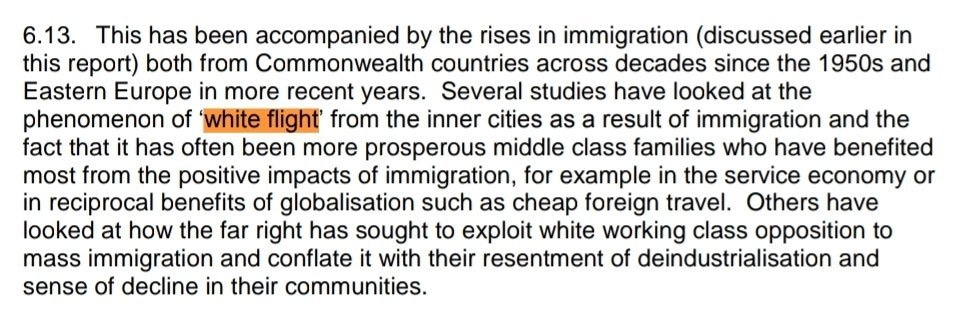
White flight in the 2016 Casey Review (highlight added)
This relationship has recently been acknowledged by the US State Department.
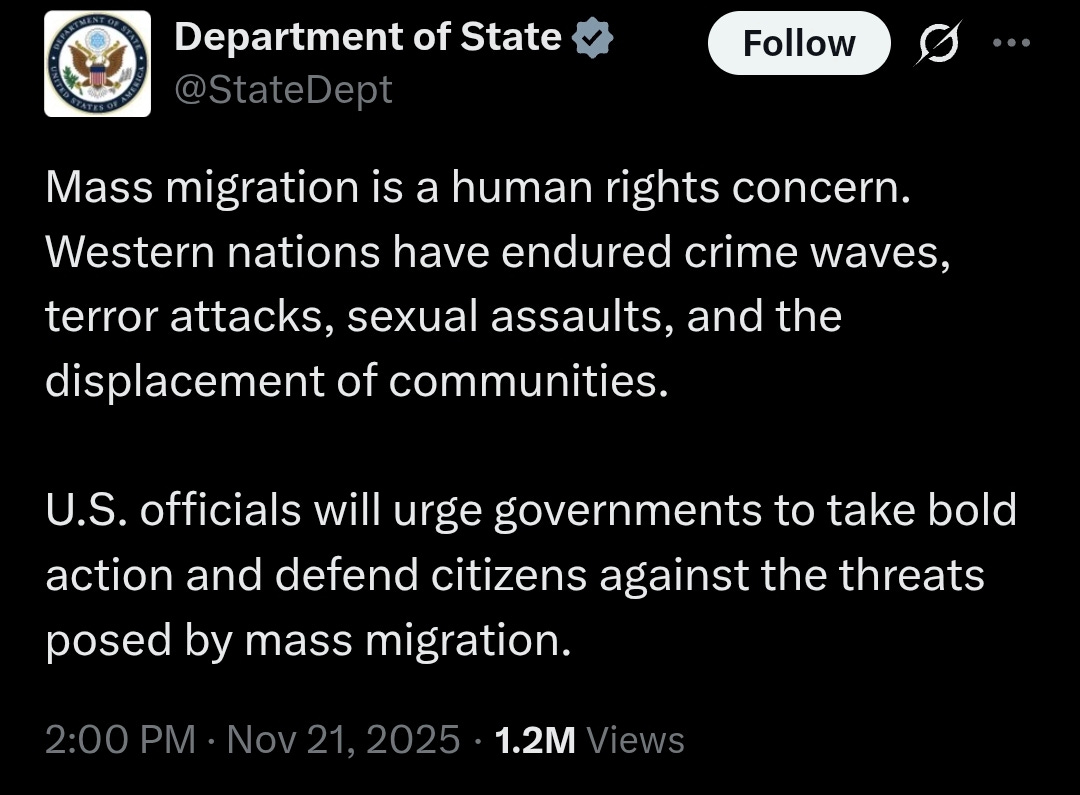
The US State Department attributes community displacement to mass migration
Those familiar with the gradual movement of Jews from London's Brick Lane area to make way for the government's incoming Bengali settlers in the 20th century will know that this isn't just a question of the White British leaving areas to avoid new arrivals.
As the slow clearance of lands of the English plods along, we have seen the formation of a new contiguous minority English region within England, which I’ve named New Mercia.
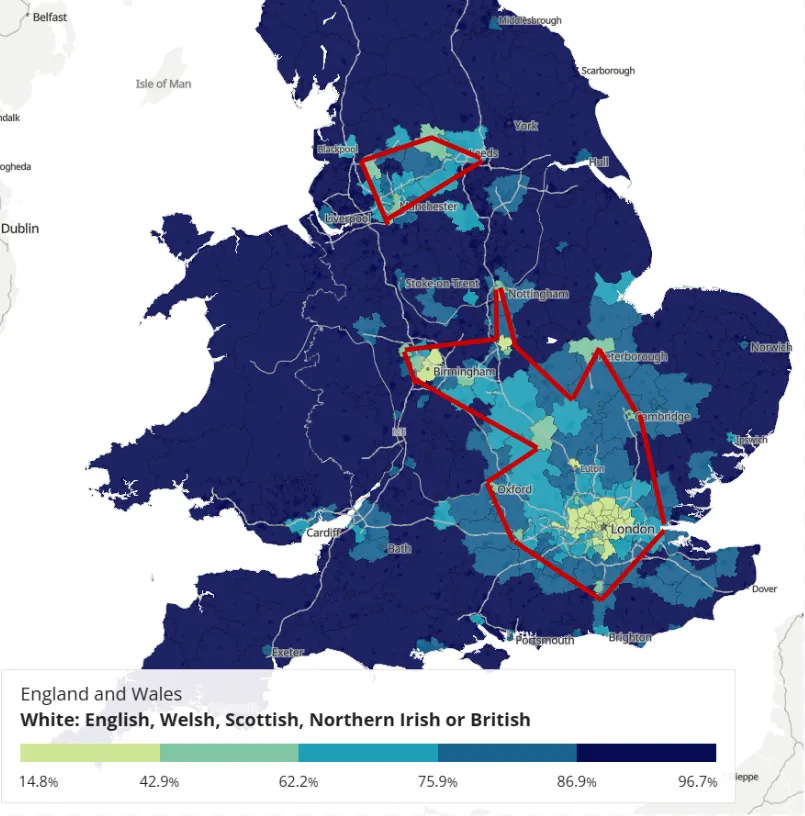
New Mercia, the new polity forming in the United Kingdom (bordered in red)
The most likely scenario is that white flight will continue as both a direct consequence of further government-led immigration, and continuation of the state's already initiated informal land clearances. The question is, where are all of those English people going?
Some are simply disappearing. A secondary effect of mass immigration is that it lowers the fertility rate of the local population. Mass immigration to some extent prevents the next generation of the English from even existing. Those English in New Mercia's urban environments are often those without the resources to leave, or others from elsewhere in England who migrate internally for work and in doing so lower their fertility rate, over generations wiping themselves out of the gene pool.
But there are still many millions of English left, pushed out of the state's new nation. So far, the pattern has shown movement to less developed, often rural areas. London's East Ender Cockneys famously abandoned the high-value infrastructure they had developed over the centuries to the government's new arrivals and moved en masse to Essex following their failure to mount a political challenge through supporting the British National Party and other groups. They have since been facing the same issues in Essex, now with their backs to the sea.
The same pattern has occurred across the Midlands, and I’ve met Anglo-Saxons who abandoned Leicester for Canada after the state ramped up its local demographic transformation process in the 1970s. Most chose closer areas to settle, creating a youth population inversion with around a quarter of Leicester's children being White British, but only around a quarter of surrounding Leicestershire's children being non-White British.
The Cornish Precedent
While pundits often describe this population displacement as unprecedented in the modern world, it is of course precedented in the British Isles. The key case study is that of the Cornish, a Brittonic people who preserved their unique culture and language despite centuries of Anglo-Saxon domination of the archipelago. Cornwall, literally “horn of the foreigners” in Old English due to its distinctive shape and population, was a redoubt of Britons engaging in their own version of white flight, moving away from the also admittedly pallid Anglo-Saxons to a kingdom on the tip of the Southwest peninsula and sometimes onwards to France's Brittany. Despite the 20th century influx of Anglos altering Cornwall's demographic and political environment (it used to vote distinctly from the West Country), it is still a haven for those fleeing the drama of modern Britain.
Much of this status was due to a combination of its relatively long-lasting political independence, its terrain making conquest very difficult, and the limited incentive to conquer it in the first place. It’s lovely, but very far away and not worth deploying all your soldiers to when you’ve got bigger problems elsewhere.
In modern Britain's political system, there is a clear equivalent to early medieval Cornwall in Ireland, which Brits have the right to live in under the Common Travel Area. However, Ireland is speed-running the demographic transformation process taking place across the American Empire. Scotland, so far, is not.
Why Would Anyone in their Right Mind Move to Scotland?
Scotland offers attractive opportunities that Ireland does not. Firstly, there is already an established Brittonic and English presence in the country, though often long-forgotten. Scots you meet around Edinburgh may not realise that they’re the descendants of Anglo-Saxon settlers who moved north long ago. Likewise, the Britons of Southwest Scotland's Strathclyde may not know that their distinctive Border Scots identity is related to them being Britons distinct from the Irish-descended Gaels of the Highlands and Glasgow. The Welcome to Scotland signs on the English border show Gaelic as well as English, but Gaelic was never widely spoken that far south. A more historically accurate approximation would put Welsh on the Borders’ signs and use Gaelic much further north.
Despite what our rulers would have you believe, this genetic affinity appears to matter significantly. Military leaders are more likely to ally with those more genetically similar to themselves. White flight itself is strong evidence for this mattering, being broadly along genetic lines.
My research has shown that Scotland itself votes along ancient genetic lines, drawn by conflicts between Iron Age kingdoms. It is genetically close enough to grant relatively friendly areas, while being divided enough to be politically exploitable for an enterprising troupe of Anglo-Brittonic settlers, with the main parties Labour and the Scottish National Party seemingly mostly squabbling over which Pakistani gets to rule over the Scots.
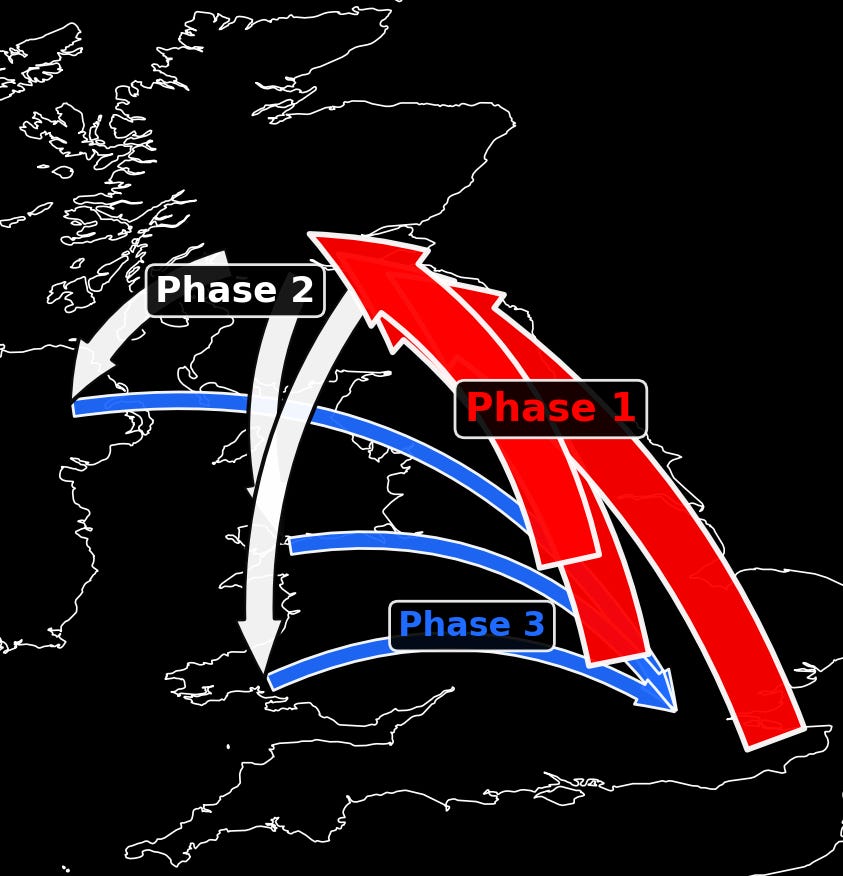
A peaceful alternative to a civil war for control of the United Kingdom
Scotland is Ripe for Conquest
Scotland's key advantage for groups like the Cockneys compared to being chased around the British Isles by the state's settlers is its highly developed independence movement. The 2014 independence referendum was won by unionists by only around 400,000 votes, the equivalent of only 100,000 settler nuclear families moving across the border and taking the country out of Whitehall's control.
Scotland also has remarkably cheap housing. For a fraction of the price of a London parking space, a family can buy their own Scottish home. Housing is so cheap that a settler can buy a Scottish flat outright for less than the savings threshold some London Councils use to judge social housing eligibility. It also has a culture of cheaper service provision overall, with parking often free and water covered in low Council Tax bills. The famously penny-pinching Scots have made their country a cost-effective one to move to.
As far as redoubts go, Scotland's terrain is perfect. In the event of a British civil war, the long undulating hills of the Borders provide ample opportunities for waylaying any approaching forces, while the Highlands have historically been perfect for guerrilla-style campaigns, with its Irish Sea coast suitable for smuggling. Even in the event of the asymmetries created with the advance of low-cost satellite and drone technology, Scotland would be a difficult terrain for a collapsing UK government to hold.
Militarily, it has a martial culture and existing infrastructure perfect for strategic alliances, with its Faslane nuclear submarine base of particular note.
Politically, Anglo-Brittonic settlers can offer Scotland what the incumbent political parties cannot: a direct appeal to the ethnically Scottish and wider British diaspora. No successful party has stood up for the rights of those with Scottish ancestry to return home to help build an independent Scotland, and none are sensible enough to appeal to the world's most powerful man, a part-Scot through his mother, President Trump. The world's richest man Elon Musk being also of British descent, and Vice President Vance being an Ulster Scot, are other obvious advantages from a Kinship Realist perspective.
We’ve Taken Scotland. Now What?
Scotland does not have to be a final destination. An independent and openly nationalist Scotland run in the interests of the native people of the British Isles would be a perfect springboard to take Northern Ireland and Wales.
Would it make any sense for Northern Ireland to remain in the United Kingdom when its Irish and Scottish inhabitants live between their ancestral homelands independent of Westminster? An association agreement with joint Irish-Scottish sovereignty seems the most logical place to start from, cutting out London entirely. Northern Ireland's demographic situation is close to favouring a referendum on Irish unification already without Scotland offering protection to its Ulster Scots, who are themselves a mixture of Lowlanders and the descendants of the ancient Ulster Irish settlers of Dál Riata on Scotland's West Coast.
The next logical step from this would be to retake Wales. Domino theory was popular in the Cold War for a reason. Once an international regime starts to fall, it’s not long before we see sovereign claims weaken across an Empire's claimed territory. The USSR's rapid collapse due to rapidly organising nationalism is a prime example of this.
Wales, like Scotland, has favourable demographics for a nativist movement. Although there are issues with its ethnic data collection, its non-native population outside of holiday resorts are primarily concentrated in its southern urban areas. It has similar terrain advantages to Cornwall and Scotland, with Scottish-style political infrastructure for relatively smooth organisation for independence.
And after Wales? The next salami-slicing step would be to take regions. Cornwall is the most likely to follow, but we must be realistic about what would likely happen in England in this scenario. The British state is not immortal. The movement alone of several hundred thousand of its productive Anglo-Saxons and other Britons to Scotland would deprive it of sufficient tax revenue to create internal social problems. Losing Scotland, Northern Ireland and Wales would trigger a loss of confidence by the financial markets so great that we would not expect it to be able to function as it does now. Currently, the British state imports vast numbers of immigrants with net negative lifetime fiscal contributions ranging roughly from several hundred thousand pounds to a million or more per head. While we would expect many of their settlers to leave as the economy restructures, their only policy response so far has been to import yet more net negative contributors and it would take rapid cultural change to do anything different.
England is already dividing into New Mercia and the Anglo-Brittonic regions. It is entirely plausible that the Anglo areas would become broadly ungovernable by Westminster as the ruling order collapses.
In this scenario, we would expect the chance of English nationalists retaking their ancestral homelands to be far more likely than the continuity UK scenario, which features rapid minoritisation and population reduction through immigration-exacerbated fertility collapse.
The advantage of this scenario is that it can be completed entirely peacefully, with the relatively easy first step of convincing only 100,000 or so British families to move to the low-cost and beautiful country to their north.
Is it likely? With a committed nationalist vanguard, yes. Would it work? Yes. Would it be better than what some describe as the inevitable civil war following native disenfranchisement? Yes.
Charles Small is an open-source intelligence consultant. Get in touch for a consultation: charles@csmall.co.uk
Just need French patriots to seize power in France and rekindle the French Scottish alliance :D
Many of the considerations of this article are applicable to other European states as well. In our case, that of the Italian state, Venetia and parts of Lombardy provide an almost perfect match to Scotland (or even more so, considering geography, ideology and economic productivity). Though, if things go South, I'd expect Italy to balkanize rather than being "reconquered".